January, 2023
The abrdn Global Absolute Return Strategies Fund returned -1.52% during the month (net of fees).
Top performers this month included the global equity zero hunger strategy, as its long basket has a growth bias in comparison to the defensive short bias of the Consumer Staples Index. This strategy benefitted from the risk-on rally in January. Secondly, given the risk-on theme, our US duration position also performed well, with US treasuries posting gains of 2.8%. Our ASEAN versus North Asia foreign exchange position contributed positively this month, particularly driven by the outperformance of the Thai baht and Singapore dollar currencies. This was due to China's reopening, which had a spillover effect and was a key boost for the tourism industry in Thailand. Our short corporate risk positions were some of the worst performers this month. Our outright short European and US equity strategies underperformed. Our equity relative-value strategies underperformed, including our US equity low volatility index versus US equity strategy and our stable quality versus market strategy.
December, 2022
The abrdn Global Absolute Return Strategies Fund returned 2.96% during the month (net of fees).
December was a strong month for our short corporate risk and defensive positions due to the market sell-off. Our short equity strategies performed particularly well, including the US equity low volatility index versus US equity strategy, the long US investment-grade corporate bond versus short equity strategy and the short European equity strategy, which all benefitted from a short growth bias compared to the wider equity market. Secondly, our US versus Italian rates position was one of the top performers, as Italian inflation and confidence indicators surprised to the upside (implying that the economy is experiencing overheating pressures) while the reverse continued in the US. Our long favoured defensive foreign-exchange position benefitted this month, particularly the long Japanese yen position, given the announcement from the BoJ on the changing of its YCC target. One of our poorest performing strategies was our global equity stable quality versus market strategy, given the broad sell-off across equity markets. Our duration positions also underperformed, as bonds sold off in the US. We have since closed our US steepener position.
File: https://commentary.quantreports.net/wp-content/uploads/2021/01/C_COMDOC_en-GB-NN_AUST-12.pdfNovember, 2022
The abrdn Global Absolute Return Strategies Fund returned -1.48% during the month (net of fees).
The Fund's positioning reflects what we see as a challenging period ahead for markets. At present, the rhetoric around inflation and central bank tightening is dominating market dynamics. This is a theme we expect to evolve as the focus moves to the consequence of weaker growth. Against this backdrop, we have positioned the Fund to take advantage of tightening financial conditions into slower growth via defensive positions in relative-value strategies and a bias towards short corporate-risk positions. In addition, we maintain longs in the US dollar, although we reduced this position in November, and long positions in developedmarket government bonds.
Our ASEAN versus North Asia foreignexchange strategy was the top performer this month. It was driven by strength in the Singapore dollar due to intervention from the Monetary Authority of Singapore and China's drive for economic equality and domestic security. Our long corporate-risk positions in global equity stable quality versus the market and contingent capital bonds performed well this month given the risk-on environment, as inflation momentum slowed and there was more supportive messaging from the Fed. The commodity carry strategy was also a top performer during the month, and we have recently taken profits from this strategy. Following the risk-on theme, our short corporate-risk trades were the biggest detractors this month, including short European equity, US equity low volatility versus US equity and short high yield. Similarly, our long favoured defensive foreign-exchange strategy underperformed due to the continued weakness in the US dollar. We have now slightly reduced our overall Fund exposure to the US dollar.
File: https://commentary.quantreports.net/wp-content/uploads/2021/01/C_COMDOC_en-GB-NN_AUST-11.pdfOctober, 2022
The abrdn Global Absolute Return Strategies Fund returned -1.50% during the month (net of fees). The benchmark Bloomberg AusBond Bank Bill Index returned 0.24% during this period.
The Fund's positioning reflects what we see as a challenging period ahead for markets. At present, the rhetoric around inflation and central bank tightening is dominating market dynamics. This is a theme we expect to evolve as the focus moves to the consequence of weaker growth. Against this backdrop, we have positioned the Fund to take advantage of tightening financial conditions into slower growth via defensive positions in relative-value strategies and a bias towards short corporate-risk positions. In addition, we maintain longs in the US dollar and developed-market government bonds.
Our ASEAN versus North Asia foreignexchange strategy was the top performer this month, driven by strength in the Singapore dollar due to intervention from the Monetary Authority of Singapore while growth and political concerns weighed on China. The UK versus emerging-marketequity relative-value strategy contributed positively, as a more supportive market interpretation of central bank tightening and some stabilisation in UK politics helped the UK equity market relative to emergingmarket equities. While sterling remained weak against historic levels, the reversal of the majority of the UK government's mini-Budget benefitted the pound; as a result, our short sterling foreign-exchange strategy contributed negatively this month. Furthermore, our short equity relativevalue strategies, including our long US investment-grade corporate-bond versus short equity strategy and our US equity low-volatility versus US equity strategy were negatively affected by the strong equity performance on the back of speculation that the Fed may start to pivot. Our global equity zero hunger basket benefitted from this strength in equities and contributed positively as a result.
File: https://commentary.quantreports.net/wp-content/uploads/2021/01/C_COMDOC_en-GB-NN_AUST-10.pdfSeptember, 2022
The abrdn Global Absolute Return Strategies Fund returned 0.16% during the month (net of fees). The benchmark Bloomberg AusBond Bank Bill Index returned 0.15% during this period.
The Fund's positioning reflects what we see as a challenging period ahead for markets. At present, fears around inflation and central bank tightening are dominating market dynamics. This is a theme we expect to evolve as the focus moves to the consequences of rising interest rates and weaker growth. As a result, we expect risk premia to rise across all assets. Against this backdrop, we maintain our defensive positions in relative-value strategies and continue to favour short corporate risk positions. We expect earnings to weaken going forward. In addition, we maintain longs in the US dollar and developedmarket government bonds.
Our UK versus emerging-market-equity relative-value strategy was the top performer this month. Its performance was helped by the significant drop in sterling given the market turmoil following the Chancellor's mini-Budget announcement. This also benefitted our short sterling currency position. Our other currency strategies were also among the top performers this month; these included our long-favoured defensive currency strategy and our long US dollar versus Chinese renminbi strategy, which benefitted particularly from the continued rally in the US dollar given the monetary tightening environment, as investors flocked to safe-haven markets. The dollar rally also exacerbated the downside on sterling, further benefitting our short positions. Our biggest detractors this month were our duration strategies, which included our European real yields and US steepener positions, as concerns over the rate-hiking paths continued. During the month, we moderately reduced our duration exposure. Lastly, some of our strategies that were exposed to corporate risk underperformed, such as our long US investment-grade corporate-bond versus short equity strategy and our global equity zero hunger strategy.
File: https://commentary.quantreports.net/wp-content/uploads/2021/01/C_COMDOC_en-GB-NN_AUST-9.pdfAugust, 2022
The abrdn Global Absolute Return Strategies Fund returned -1.13% during the month (net of fees). The benchmark Bloomberg AusBond Bank Bill Index returned 0.15% during this period.
The Fund's positioning reflects what we see as a challenging period ahead for markets. At present, fears around inflation and central bank tightening are dominating market dynamics. This is a theme we expect to evolve as the focus moves to the consequences of rising interest rates and weaker growth. As a result, we expect risk premia to rise across all assets. Against this backdrop, we maintain our defensive positions in relative-value strategies and continue to favour short corporate risk positions. We expect earnings to weaken as we move into the second half of the year. In addition, we maintain longs in the US dollar and in developed-market government bonds.
Our equity relative-value trades and our short corporate risk trades performed well. Our positions in US equity low volatility versus US equity, global equity zero hunger and short high-yield corporate bonds were all among the top performers. Our short position in sterling foreign exchange also performed well, as inflation continued to soar in the UK in conjunction with the worsening energy crisis and growing recession fears. Our interest-rate strategies were the biggest detractors, which included our US duration, European real yields and US steepener strategies. Markets have been pricing more aggressive hiking cycles, as inflation continues to rise across developed markets, leading us to diversify our duration exposure. However, we believe that the market is underestimating the timing and magnitude of easing once growth starts to slow materially
File: https://commentary.quantreports.net/wp-content/uploads/2021/01/C_COMDOC_en-GB-NN_AUST-8.pdfJuly, 2022
The abrdn Global Absolute Return Strategies Fund returned -1.30% during the month (net of fees). The benchmark Bloomberg AusBond Bank Bill Index returned 0.12% during this period.
The Fund positioning reflects what we see as a challenging period ahead for markets. At present, fears around inflation and central bank tightening are dominating market dynamics, a theme we expect to shift as the focus moves to the consequence of weaker growth. As a result, we expect risk premia to rise across all assets. Against this backdrop, we maintain our defensive positions in relative-value strategies and continue to favour short corporate risk positions. We expect earnings to weaken as we move into the second half of the year. In addition, we maintain longs in the US dollar and developed government bonds.
Within our fixed-income exposures, our US interest-rate position has been a strong performer, driven by the decline in US 10-year government bond yields, as the economic outlook continues to deteriorate (this was the biggest monthly decline since August 2019). Similarly, we saw our Australian interest-rate strategy benefit from the sharp drop in yields; we have since exited this strategy after its strong performance. The UK versus emerging-markets (EM) equity relative-value strategy contributed positively, as the UK benefitted from the rebound in developedmarket (DM) equities while EM equities remained weak. Our US equity low volatility index versus the US market was the biggest detractor this month, along with our positions in Asian markets, including our Asia high-yield, short Japanese government bonds and Chinese versus DM equity strategies. This was driven by the negative move in Chinese markets, with the Covid-19 resurgence and fines and scrutiny for key technology giants weighing on investor sentiment in the region
File: https://commentary.quantreports.net/wp-content/uploads/2021/01/C_COMDOC_en-GB-NN_AUST-7.pdfJune, 2022
The abrdn Global Absolute Return Strategies Fund returned 1.07% during the month (net of fees). The benchmark Bloomberg AusBond Bank Bill Index returned 0.05% during this period.
The Fund positioning reflects what we see as a challenging period ahead for markets. At present, fears around inflation and central bank tightening are dominating market dynamics, a theme we expect to shift as the focus moves to the consequence of weaker growth. As a result, we expect risk premia to rise across all markets. Against this backdrop, we maintain our defensive positions in relative-value strategies and continue to favour short corporate risk positions, as we expect earnings to fall relative to expectations. In addition, we maintain longs in the US dollar and developed government bonds. Our top contributor this month was a short European equity exposure, which performed well, as global equities sold off. Our long US investment-grade credit versus short equity and our US equity low volatility versus market relative-value strategies also contributed, although the UK versus emerging market relative-value position detracted from performance. The portfolio's Australian interest-rate position was the largest detractor. In foreign currency positions, our long defensive foreign exchange basket contributed positively this month, significantly affected by strong US dollar performance.
File: https://commentary.quantreports.net/wp-content/uploads/2021/01/C_COMDOC_en-GB-NN_AUST-6.pdfMay, 2022
The abrdn Absolute Return Global Bond Strategies Fund returned -1.02% (net of fees) during the month. The benchmark Bloomberg AusBond Bank Bill Index returned 0.03%. The Fund positioning has been based on the expectation that as the cycle matures next year, economic growth will slow, with market fundamentals beginning to weaken in the second half of this year. As a result, we expect risk premia to rise across all markets and are therefore running a lowerthan-average level of market exposure. In this environment, the portfolio continues to be defensive. We have reduced exposure to corporate bond markets while shifting the interest rate exposure to those sections of the market that we expect to perform well in an environment of tightening financial conditions and slowing growth.
Overall, our interest rate risk-oriented strategies detracted from performance. Positive contribution from the recently introduced short Italian government bond position and the subsequent US versus Italian interest rates relative value strategy was offset by poor performance from our US interest rates exposure. Risk-facing corporate bond positions also detracted as exposures to asset-backed securities, short-dated emerging market corporate bonds and high yield bonds weighed on performance. This was partly mitigated by positive returns from our credit decompression strategy. Within currency exposures, our US dollar versus Chinese renminbi position delivered positive returns, although this was offset by performance drag from our favoured defensive foreign exchange strategy.
File: https://commentary.quantreports.net/wp-content/uploads/2021/01/C_COMDOC_en-GB-NN_AUSB-2.pdfApril, 2022
The ARGBS Australian Master Trust Fund returned -1.69% (net of fees) during the month. The benchmark Bloomberg AusBond Bank Bill Index returned 0.01%. The Fund positioning has been based on the expectation that economic growth and inflation will remain strong as we move through the first half of 2022, allowing central banks to tighten policy.
Our bond market positions provide exposure to the global economic recovery and enhance the income-generating component of the portfolio. Holdings include global short-dated credit, high-yield credit, contingent capital bonds and asset-backed securities. Additionally, our US inflation strategy gives the Fund exposure to near-term pricing pressures. During February, positive performance from our favoured cyclical FX strategy was not enough to offset negative performance from our risk-facing assets exposures, such as our emerging markets income and high-yield bond positions, which struggled as conflict on the Russian-Ukrainian border escalated and surprised investors. Our global FX behavioural relative value strategy also suffered in this environment.
File: https://commentary.quantreports.net/wp-content/uploads/2021/01/C_COMDOC_en-GB-NN_AUSB-1.pdfFebruary, 2022
The Aberdeen Standard Global Absolute Return Strategies Fund returned -1.75% during the month (net of fees).
The benchmark Bloomberg AusBond Bank Bill Index returned 0.01% during this period. The Fund positioning has been based on the expectation that growth and inflation will remain strong during the first half of 2022, allowing central banks to tighten policy. In this environment, we have been focused on owning higher-yielding assets across equity, bond, currency and volatility strategies.
File: https://commentary.quantreports.net/wp-content/uploads/2021/01/C_COMDOC_en-GB-NN_AUST-5.pdfJanuary, 2022
The Aberdeen Standard Global Absolute Return Strategies Fund returned -2.55% during the month (net of fees).
The benchmark Bloomberg AusBond Bank Bill Index returned 0.01% during this period. The Fund positioning has been based on the expectation that growth and inflation will remain strong as we move through the first half of 2022, prompting central banks to tighten policy. In this environment, we have been focused on owning higher-yielding assets across equities, bonds, currencies and volatility strategies.
File: https://commentary.quantreports.net/wp-content/uploads/2021/01/C_COMDOC_en-GB-NN_AUST-4.pdfDecember, 2021
The Aberdeen Standard Global Absolute Return Strategies Fund returned 2.10% during the month (net of fees). The benchmark Bloomberg AusBond Bank Bill Index returned 0.00% during this period. The Fund positioning has been based on our expectation that economic growth will remain strong and inflation will start to moderate as we move through the first half of 2022, allowing central banks to tighten policy gradually. In this environment, we have been focused on owning higher yielding assets across equities, fixed income, foreign exchange (FX) and volatility strategies. Our risk-facing assets exposures, such as our equity, emerging market and high-yield positions delivered positive performance as risk sentiment improved. Our overall inflation exposure also posted positive performance.
The US dollar gave back some of its November gains against most currencies. As a result, our US dollar versus euro currency pair lost ground as did some of our diversifier and defensive strategies, such as our favoured defensive FX and global FX behavioural relative value positions.
File: https://commentary.quantreports.net/wp-content/uploads/2021/01/C_COMDOC_en-GB-NN_AUST-3.pdfOctober, 2021
The ARGBS Australian Master Trust Fund returned -1.39% (net of fees) during the month. The benchmark Bloomberg AusBond Bank Bill Index returned 0.0%. Exposures to interest rates, inflation and EMs drove the negative performance. Gains from our US yield curve flattener were more than offset by losses from our European yield curve steepener as the interest rate curve flattened. Similarly, our overall inflation exposure detracted from performance as the positive return from our European inflation position was more than offset by the poor performance from our short UK inflation strategy. Additionally, our allocations to Mexican interest rates, Asian corporate bonds and short-dated EM corporate bonds detracted from performance. On a positive note, our foreign exchange (FX) allocations, such as our FX favoured carry strategy, posted gains.
File: https://commentary.quantreports.net/wp-content/uploads/2021/01/C_COMDOC_en-GB-NN_AUSB.pdfNovember, 2021
The Aberdeen Standard Global Absolute Return Strategies Fund returned -0.14% during the month (net of fees). The benchmark Bloomberg AusBond Bank Bill Index returned 0.01% during this period. The Fund positioning has been based on the expectation that growth will remain strong and inflation will gradually moderate as we move through the first half of 2022, allowing central banks to tighten policy slowly. In this environment, we have been focused on owning higher-yielding assets across equities, corporate bonds, currency and volatility strategies.
File: https://commentary.quantreports.net/wp-content/uploads/2021/01/C_COMDOC_en-GB-NN_AUST-1-1.pdfAugust, 2021
The Aberdeen Standard Global Absolute Return Strategies Fund returned 0.86% during the month (net of fees). The benchmark Bloomberg AusBond Bank Bill Index returned 0.0% during this period.
Our central case is one of strong economic growth, while any rises in inflation above central banks' targets are likely to be short-lived. In this environment, we expect positive returns from riskier assets like corporate bonds and equities, with nominal and real interest rates remaining fairly stable. However, we are mindful of different market scenarios. In particular, if the Fed tolerates higher-than-expected inflation, this will push real interest rates lower. As a result, riskier assets that benefit from a strong economy should do well. Alternatively, central banks, particularly the Fed, could start removing support earlier than expected, which might have a negative impact on riskier assets
File: https://commentary.quantreports.net/wp-content/uploads/2021/01/C_COMDOC_en-GB-NN_AUST-2.pdfJuly, 2021
The Global Absolute Return Strategies Fund returned -1.31% during the month (net of fees). The benchmark Bloomberg AusBond Bank Bill Index returned 0.0% during this period.
The Fund is positioned for strong economic growth and a gradual fall in inflation, with central banks likely to remain supportive. In this environment, we believe that real interest rates will rise modestly, the US dollar will remain steady, EM bonds will generate a modest positive return and equities will continue to perform well. As a result, the Fund retains a preference for equities, corporate bonds and EM bonds (versus the US dollar), with short positions in US real interest rates and UK inflation.
File: https://commentary.quantreports.net/wp-content/uploads/2021/01/C_COMDOC_en-GB-NN_AUST-1.pdfMay, 2021
The Global Absolute Return Strategies Fund returned 0.15% during the month (net of fees). The benchmark Bloomberg AusBond Bank Bill Index returned 0.0% during this period. Our thematic equity strategies all advanced over the month. The commodity position also contributed, as commodity prices continued to rise over May. Within our EM-related exposures, the EM income positions performed well. However, the EM foreign-currency relative-value position delivered a negative return. We reduced this position as our view on EMs has become more favourable.
The Fund is positioned for an economic recovery. Central bank policies remain supportive, while the pace of vaccine rollouts points to a global economic rebound as lockdown measures ease. Against this backdrop, the Fund's main allocation is to equities. These are skewed towards thematic strategies, but with reduced exposure to cyclicality and momentum factors since the beginning of the year. The Fund also has income-generating exposure to corporate bonds, EM debt, commodities and interest rates. We retained some relative-value positions such as the US versus German interest rate strategy and foreign-currency and inflation strategies. These are designed to enhance the Fund's defensive properties, should riskier assets fall. This reflects the uncertainty around the impact of Covid-19, vaccine challenges and continuing geopolitical risks. We increased our exposure to equities and corporate bonds during May. This reflected more attractive valuations during the month (HY bonds and global equity industrial automation) and a desire to increase exposure to more stable strategies
File: https://commentary.quantreports.net/wp-content/uploads/2021/01/C_COMDOC_en-GB-NN_AUST.pdfNovember, 2020
The Global Absolute Return Strategies Fund returned 2.36% during the month (net of fees). The benchmark Bloomberg AusBond Bank Bill Index returned 0.01% during this period. In the positive market environment, our equity exposures, such as the Japanese equities, European equities infrastructure, global equity future mobility and industrial automation strategies performed well.
Within fixed income, corporate bond markets posted positive returns. High-yield bonds performed particularly well, as investors moved into riskier assets. Consequently, our high-yield bond position delivered strong returns. Core developed market sovereign bonds initially sold off after the vaccine news. But inflation expectations remained largely unchanged, and central banks stated that their focus remains on the next few difficult months. As a result, policy support and quantitative easing remained important drivers.
Over the month, yields on 10-year government bonds in the US were broadly flat, while German and Australian bonds weakened. Our long Australian interest rate strategy detracted from performance as a result. Given the positive backdrop for risk assets, our diversifying strategies dragged on performance. In particular, the emerging market foreign-exchange relative-value and Korean won versus Australian dollar positions suffered. Similarly, our defensive Japanese yen versus euro position lost ground.
File: https://commentary.quantreports.net/wp-content/uploads/2021/01/162844156.pdfticker: ETL0130AU
release_schedule: Monthly
commentary_block: Array
factsheet_url:
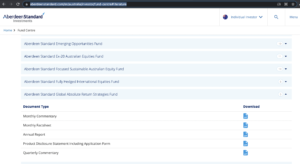
www.aberdeenstandard.com/en/australia/investor/fund-centre#literature
- Select the Related Fund
- Document Type
- Monthly Commentary
asset_class: Alternatives
asset_category: Macro
peer_benchmark: Alternatives - Macro Index
broad_market_index: Credit Suisse AllHedge Global Macro Index
structure: Managed Fund
manager_contact_details: Array
fund_features:
The primary investment objective of the Fund is to deliver a positive absolute return over the medium to long term in all market conditions. The Fund is actively managed, with a wide investment remit to target a level of return over rolling three-year periods equivalent to cash plus 5% per year, before charges. We would expect it to exhibit annualised volatility of between 4% and 8% in ordinary market conditions or, more broadly, between one-third and a half of the risk of global equities. The fund is actively managed, with a wide investment remit to target a level of return over rolling three-year periods equivalent to cash plus five per-cent a year, gross of fees. It exploits market inefficiencies through active allocation to a diverse range of market positions. The fund uses a combination of traditional assets (such as equities and bonds) and investment strategies based on advanced derivative techniques, resulting in a highly diversified portfolio. The fund can take long and short positions in markets, securities and groups of securities through derivative contracts.